
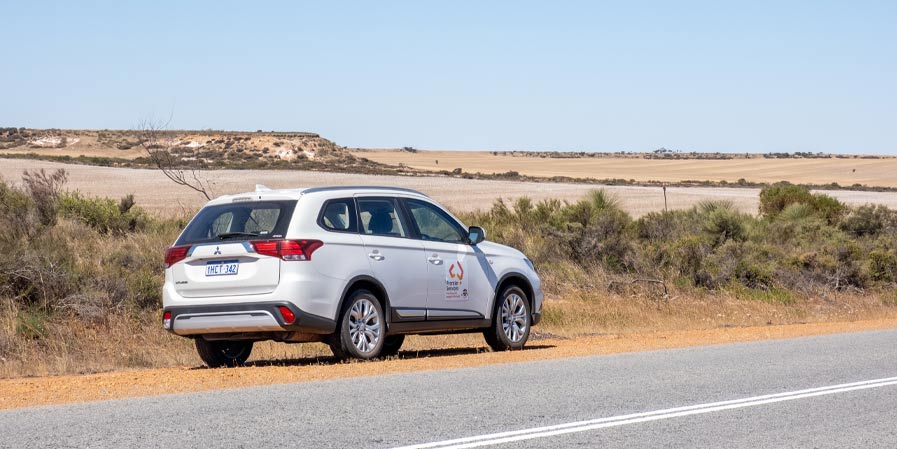
In a small town in regional Western Australia, Ricky-Lee is doing what many rural Australians do – supporting her family through thick and thin, often with little outside help. But when her adult son was diagnosed with schizophrenia after nearly twenty years of uncertainty, it marked a turning point.
“He’d been struggling for years,” Ricky-Lee says. “We knew something wasn’t right, but it took so long to get a proper diagnosis. It felt like we were just stuck.”
Her son now lives across the road from her in an independent home. It’s close enough for support, but still gives him space. He has three children who come to stay during school holidays – visits filled with laughter, love, and the everyday stress of making ends meet.
“Feeding three extra mouths and trying to get fuel to pick them up—it gets hard,” she explains. “And with the cost of everything going up, we needed help.”
That’s when she made the call. It was the first time she’d ever asked for assistance.
The help came quickly, and it came in the form of a Bush Chaplain – part of the Frontier Services network offering pastoral and practical support to people in rural and remote communities.
“I rang and he said, ‘I’ll be driving back through tomorrow – I’ll stop in.’ And he did. Just like that.”
That first visit turned into a lasting connection. Bush Chaplain David Jackson checks in regularly, providing not just food and fuel vouchers when needed, but someone to talk to 0 someone who understands the pressure of supporting a loved one through mental illness, particularly in an isolated area with limited resources.
“He was a huge help to my son,” Ricky-Lee says. “He’s just an easy person to talk to. Calm. Genuine. That makes a big difference.”
Her story reflects a broader reality in regional Australia, where community members often step in to fill the gaps left by overstretched health systems. Specialist mental health services are hours away, often requiring travel to Perth or Geraldton. Telehealth can help, but for complex needs, it’s not always enough.
David Jackson, a long-time advocate for rural mental health, says many people facing chronic conditions simply grow tired. “They get worn out travelling back and forth to appointments. Some stop going altogether, choosing instead to stay home and deal with their symptoms – sometimes until it’s too late.”
In Ricky-Lee’s case, having a local connection through the Bush Chaplaincy program has helped maintain stability – for her, her son, and her grandchildren. It’s a lifeline that supports all three generations.
“This is more than just about health,” she says. “It’s about being seen, being heard. Knowing someone’s there.”
Ricky-Lee’s story highlights the importance of place-based, people-focused care. Programs like Frontier Services’ Bush Chaplaincy play a crucial role in preventive care and community wellbeing. They show up when others can’t. They help families cope, regroup, and carry on.
In rural and remote areas, community connection isn’t just a comfort – it’s often a key part of keeping people well.
For Dr Rebecca Devitt, providing high-quality maternity care in rural Australia is both a passion and a necessity. As a Read more
In the vast Northern Territory, where red earth stretches beneath endless skies, women are embarking on powerful health journeys of Read more

In the back room of an old footy club—one of those spaces that carries the scent of instant coffee, eucalyptus, Read more

In rural towns across Australia, playgroups are more than just a space for children to play. They serve as vital Read more