

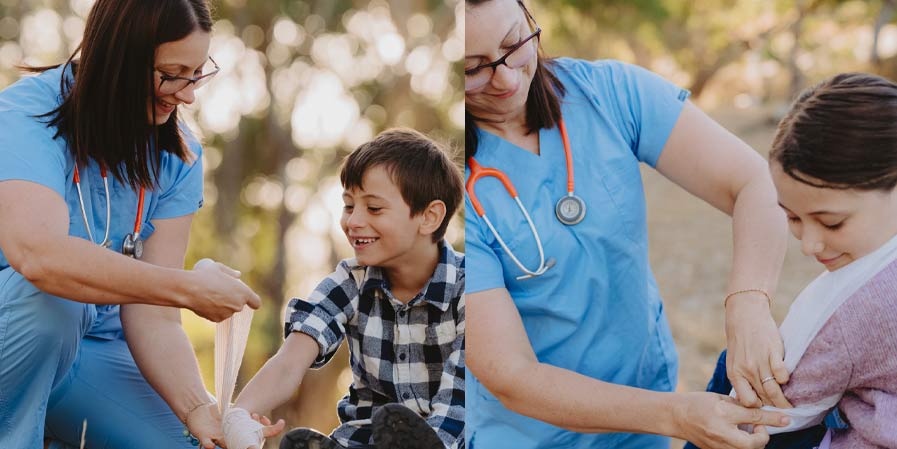

In the back room of an old footy club—one of those spaces that carries the scent of instant coffee, eucalyptus, and worn lino—a group gathered for a first aid session. A baby fussed. A teenager scrolled quietly on her phone. A toddler chewed on a toy truck. Across the table, a grandmother watched with crossed arms and cautious curiosity.
At first, she didn’t say much. But during the CPR demonstration, she leaned forward, her eyes suddenly sharp with focus. Later, during a break, she quietly pulled aside Grace Larson, a paediatric intensive care nurse and co-founder of The Sisterhood Project. “We’ve always had to just wait and hope,” the grandmother said. “Now we know what to do.”
That moment stayed with Larson. The woman was one of three generations in the room helping raise the same baby. It wasn’t a formal training centre or hospital seminar—just a dusty room in a small rural town, where help doesn’t always come quickly and emergencies rarely wait for business hours.
The Sisterhood Project didn’t begin with a business plan or a big budget—it began with listening. With a background in paediatric intensive care, Larson had witnessed the devastating speed with which a child’s life can change—and the powerful difference made when someone nearby knows how to respond. Whether it’s performing back blows for choking, starting chest compressions, or recognising the signs that it’s time to call for help, these skills can be lifesaving.
In rural areas, families are three times more likely to lose a child to preventable injury than those in cities. Larson has met mothers who’ve driven hours just to access basic baby and child first aid training. She’s spoken to fathers who’ve never been shown what to do if their baby stops breathing. And she’s listened to grandparents who’ve stepped in as full-time carers—without any formal support or training.
So The Sisterhood Project took the education to them.
Starting small, they visited community halls, playgroups, and farm kitchens—anywhere families felt safe and comfortable. They covered the essentials: choking, fevers, CPR. Materials were translated where needed, language simplified, and examples tailored to rural and farm life. They brought colouring books for the kids, and when possible, sandwiches for parents who hadn’t eaten all day.
Sometimes, the sessions weren’t just about information. They were about holding space—for fear, for guilt, for the stories people carry. One mother, tearfully recounting her child’s recent febrile seizure, whispered, “If only you had come earlier, I’d have known what to do…”
In just two years, The Sisterhood Project has trained more than 500 parents and carers across Victoria, NSW, and WA. But Larson believes what matters most isn’t the numbers—it’s the quiet confidence that grows in those rooms. It’s the ripple effect, when someone goes home and teaches a neighbour how to start CPR.
The project is now developing a free, open-access app so that lifesaving skills can reach even the most remote households. It’s not a replacement for human connection, but it’s another lifeline for those navigating parenthood in isolation.
This work aligns closely with the theme of Rural Healthcare Across the Lifespan. While the focus is often on emergencies, at its heart, The Sisterhood Project is about strengthening families—across generations. It’s teenagers stepping up to learn choking management before babysitting their nieces. It’s elders reflecting, “We didn’t have this when I was young, but we need it now.”
In a country as vast and varied as Australia, healthcare isn’t always about hospitals or helicopters. Sometimes, it’s about a quiet moment in a footy club, a new mum learning how to keep her baby safe, and a grandmother who no longer needs to wait and hope—but knows exactly what to do.
On Mondays, in a building nestled between swaying gumtrees and the Central Queensland Coastline, 15 fresh parents gather in a Read more