
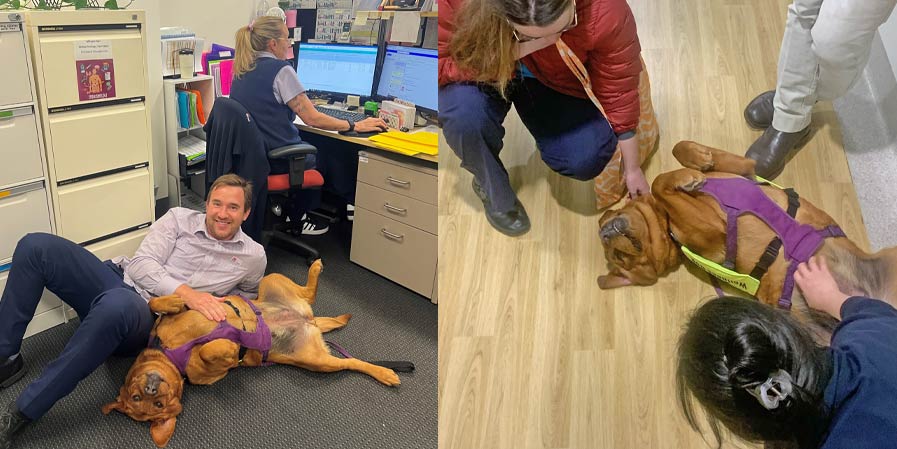

It’s been a long day in the ED with the usual mix of patients, but today has been different. You arrived quite tired from leaving late the night before, you have been yelled at by disgruntled patients and had to assist in a child resuscitation that didn’t work out as hoped. This has left you feeling low and on edge. While you are contemplating your career choice you feel a warm presence gently against your leg. You look down to see the staff wellness dog looking up at you with those empathetic eyes boring into your soul, begging to help you. You kneel down and hug the dog, and your world feels that bit better. You feel understood and supported in a small way.
Anyone who owns a dog would understand the love and support they provide for no reward, but just because they can.
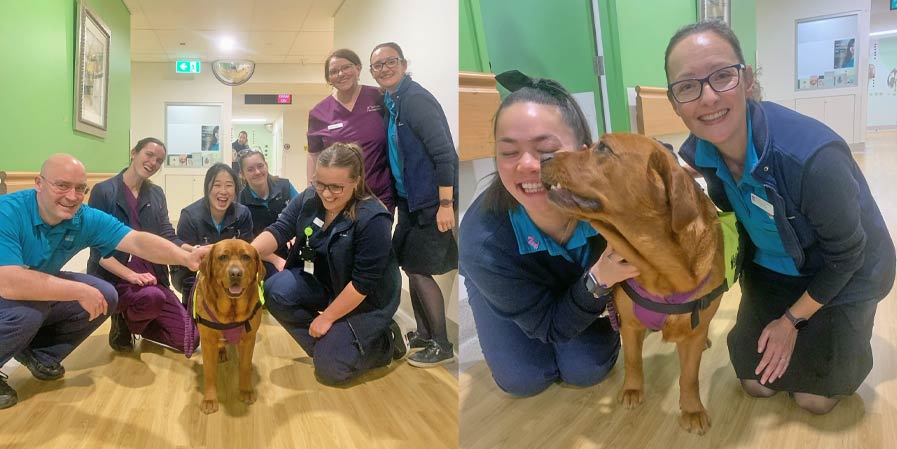
It was the end of 2022. After a couple of hard years of COVID in our ED, staff were feeling stretched. After some discussion it was highlighted that a workplace support dog would make their day just that bit brighter and easier. Out of this the Orange Health Service Staff Wellness Dog Program was born. As if was meant to be, two dogs were immediately available to be trialled as support dogs. Freyja, a 2-year-old Labrador, and Ben, a 10-year-old English Springer Spaniel and retired military working dog. Both dogs were very people-orientated and transitioned into their new job with ease and enthusiasm.
From day one the dogs were welcomed warmly, and staff were eager to spend time with them – from quiet sits to taking the dog for a walk in the hospital grounds. The dogs go on regular rounds to the staff areas of the ED and the feeling of the department lifts. It was not long before requests from other areas of the hospital started to roll in and the dogs became a noticeable presence through the corridors and meeting rooms of the hospital.
The scenario above is at the extreme end of what the dogs do, but it does happen. Staff have had days when they have been devastated and, in the past, would have pushed through with negative effects on their psyche or gone home. The dogs have changed that dramatically. The dog is either sought out or attends the department as soon as they notice that a staff member needs some quiet understanding. Five or ten minutes with Freyja or Ben, particularly going for a walk and sitting under a tree, sees a phenomenal transformation. Staff members return to work with a lifted spirit and are able to finish their shift just knowing that, if they need it, the dog will return.
Over the months, patients soon noticed the dogs and requested to be allowed to spend time with them as well. This first occurred in public areas, such as the corridors, but it was recognised that the effect on the patients and their families was significant. Requests started going out for the dogs to visit lonely or distressed patients – from the young, frightened child in the ED through to the elderly patient missing their own dog. These interactions have seen children become happy, sometimes encourage patients to allow procedures that they wouldn’t have allowed before, and smiles on faces of patients that have been feeling miserable during their stay. It has been so welcomed and life changing that the dogs are now starting their next journey to support both staff and patients.

You’ve heard of retirees going back to work. But what about returning to the workforce after you’ve retired twice? That Read more
In the Murrumbidgee region, health professionals are doing remarkable work. Across vast distances and complex systems, they deliver person-centred care, Read more
Australian rural healthcare practitioners face well-documented challenges like professional isolation, expanded scopes of practice, staff shortages, and limited learning opportunities. Read more

When emergency physician Dr Tim Baker looks out across the volcanic plains of south-west Victoria, he is reminded that great Read more