

When emergency physician Dr Tim Baker looks out across the volcanic plains of south-west Victoria, he is reminded that great things can grow from tough ground. For years, Tim and his colleagues at Deakin University’s Centre for Rural Emergency Medicine (CREM) in Warrnambool, on Eastern Maar Country, have been trying to answer a difficult question: how do you do research that is truly rural, when most of the evidence comes from metropolitan hospitals?
It is a question that echoed across the country. In small hospitals and multipurpose services from Broome to Bega, clinicians wanted to ask research questions that mattered to their patients, but lacked time, support or connection.
In 2019, Dr Tahnee Dunlop joined CREM as deputy director, bringing experience from national research networks such as PREDICT (Paediatric Research in Emergency Departments International Collaborative). She had seen how powerful it was when clinicians stayed connected, even across long distances. At the ACEM Rural, Regional and Remote conference in July 2024, she caught up with former colleagues now scattered across rural Australia, including Dr Bridget Honan, working in Kingaroy on Wakka Wakka Country, and Dr Vinay Gangathimmaiah in Townsville, on the lands of the Wulgurukaba and Bindal peoples. During those conversations, the idea took shape: what if rural emergency clinicians had a research network of their own?
By December 2024, that idea became reality. The Research in Rural Emergency Care Network (RRECN) was launched, hosted by Deakin’s CREM and dedicated to improving emergency care for people living outside the big cities.
“It started with a handful of us in rural EDs who just wanted to connect,” says Bridget. “Now there are more than 160 members. We have nurses, paramedics, retrievalists, academics, medical students and doctors, all sharing ideas and energy.”
Collaboration is at the heart of RRECN. The network uses a practical definition of rural. In Australia it focuses on the Modified Monash Model (MMM 2 to 7). In New Zealand, it uses the Geographical Classification for Health (U2 to R3). This keeps the focus firmly on the realities of care outside metropolitan hospitals.
The early projects reflect that focus. One study is exploring barriers and enablers to rural emergency research. Another uses a modified Delphi process to identify research priorities for rural emergency care across Australia. A third project, a scoping review of pharmacoinvasive management for STEMI, is examining how evidence can better guide treatment when distances are long and cath labs are far away. These might sound technical, but the purpose is simple: better evidence for better care, wherever people live.
“What makes RRECN different is that the questions come from the coalface,” says Tim. “We are not waiting for metro researchers to tell us what matters. We are defining it ourselves.”
That grassroots approach is already paying off. Members meet online, share resources, mentor new researchers, and help each other through ethics applications, study design and data collection. Many describe RRECN as both a professional network and a source of personal encouragement. A monthly email highlights recent research with a rural lens, giving clinicians practical tools they can apply to their own practice.
In February 2026, members will meet in person for the first time at the inaugural RRECN Members’ Day in Warrnambool. It is a fitting place for a celebration of a movement that began on a windswept corner of the Victorian coast and has grown into a national community.
“We want people to see that research is not something that happens elsewhere,” says Tahnee. “It is happening here, in our communities, led by rural clinicians who understand their context.”
RRECN is open to anyone working in regional, rural or remote emergency care. Whether you have led a study or you are simply curious about how research could improve your practice, you are welcome.
Find out more or join the network at www.ruralemergencymedicine.org. Every new member strengthens the collective voice for rural emergency care across Australia and New Zealand.
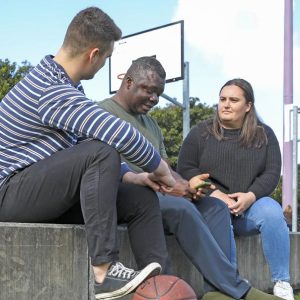
Rural mental health professionals face unique challenges – from professional isolation to high caseloads and limited peer support. But innovative Read more
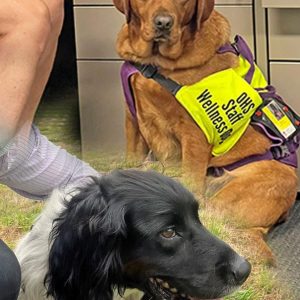
It’s been a long day in the ED with the usual mix of patients, but today has been different. You Read more
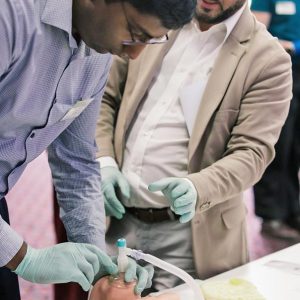
One third of Australians live in rural, regional, and remote areas. Delivering quality health education, research, and services to these Read more
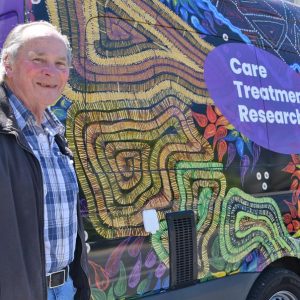
Grampians Health has launched a dedicated mobile clinical trials unit bringing research, innovation, and care directly to Western Victorian regional Read more