
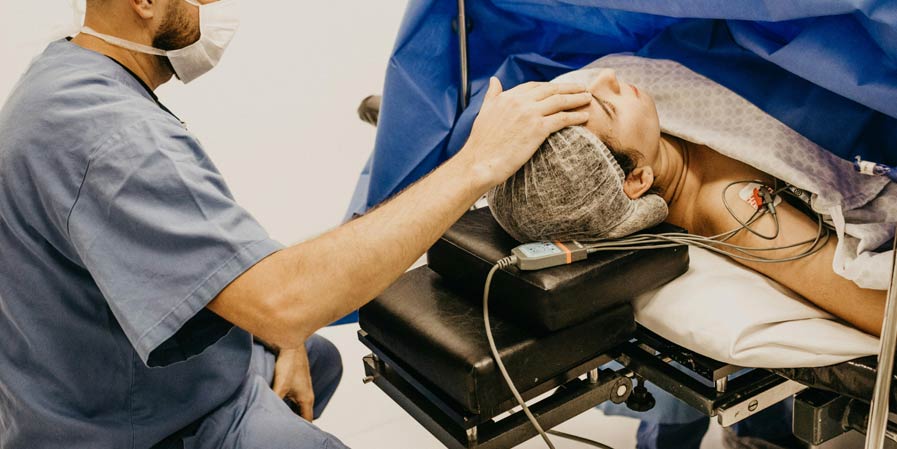
When I first started working on South Australia’s Eyre Peninsula 14 years ago, I stepped into a very different kind of medical community. Patients were independent and stoical. Colleagues across nursing, allied health and general practice worked creatively, often without the backup of tertiary services. What struck me quickly, however, was how fragile the financial foundations of this system were, and how easily they could be undermined by decisions made far from the region.
I have remained a consistent advocate for better rural health services. The inequity in service provision between rural and metropolitan areas is very stark. This is especially the case in specialties such as pain medicine where there is a national shortage of specialists and training opportunities. Conversely, the rewards of providing a service in a setting of a severe lack of supply are very solid. Patients, colleagues and the local community are all very keen to have me stay.
For patients, the advantages are obvious. As an example, an individual suffering severe, chronic pain from extensive lumbar spine disease will not relish the prospect of a 45-minute flight to Adelaide in a 24-seat plane in challenging winter weather. The alternative of a 9-hour car journey is even worse. Correspondingly, the option of seeing a specialist in their own town or after a short drive on quiet roads is an easy sell.
Despite these positives, the economics of running a rural practice are tough. It is an absurd reality that it is consistently cheaper for me to fly from Adelaide to any Australian state capital than it is for me to fly to the Eyre Peninsula. This differential has widened in recent years. This simple fact means that any rural clinics I run start from a position of financial disadvantage to those I run in Adelaide.
There have also been metro-focused perverse incentives that have stripped key personnel from the rural workforce. A good example is the negative effect of NDIS incentives which have seen excellent allied health colleagues leave their practices in rural towns for richer and easier pickings offered through NDIS contracts in metro regions.
The Federal Government has emphasised its desire to resolve the obvious inequities of rural workforce deployment. However, key financial barriers have yet to be addressed. In more recent years, providing services to a local Aboriginal health service has allowed me to access funding from the South Australian Rural Doctors Workforce Agency. This has helped stabilise part of my work, but it highlights how reliant rural services can be on short-term or targeted funding streams.
I am also under no illusions as to the difficulties these disadvantages raise for younger colleagues. I started my rural work at a time when I had an established career and my family commitments no longer needed to focus on the care of small children. Younger colleagues would find both the personal and financial commitments punishing.
For all the economic challenges, the country remains one of the best places I have ever worked. The collegiality is genuine, the patients resilient, and the impact of specialist care immediate and visible. Rural Australia does not need rescuing; it needs fair settings that allow its health services to thrive. When those conditions are met, there are few more rewarding places to practice medicine.

It’s 4am, and I’ve been awake for 22 hours. My shift started at 2:30pm and the surgeries haven’t stopped all Read more

Growing up in rural Queensland instilled in Dr Prue Wallin resilience, compassion, and a deep respect for community—values that shaped Read more
In the Murrumbidgee region, health professionals are doing remarkable work. Across vast distances and complex systems, they deliver person-centred care, Read more
In farming communities across Australia, the pressures of rural life are constant. From isolation and financial stress to extreme weather Read more