
When a telehealth call drops in rural and remote Australia, the consultation doesn’t stop.
It shifts.
The video freezes. The sound cuts out. The doctor switches to phone, asks more precise questions, and guides a patient—or their family member—through what needs to happen next.
This is the reality of telehealth outside metropolitan areas. It is not seamless. But in the hands of a skilled doctor, it works.
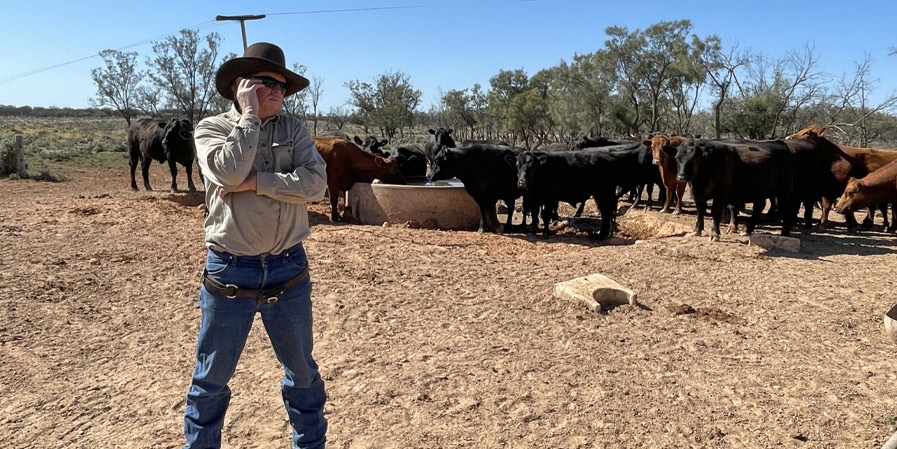
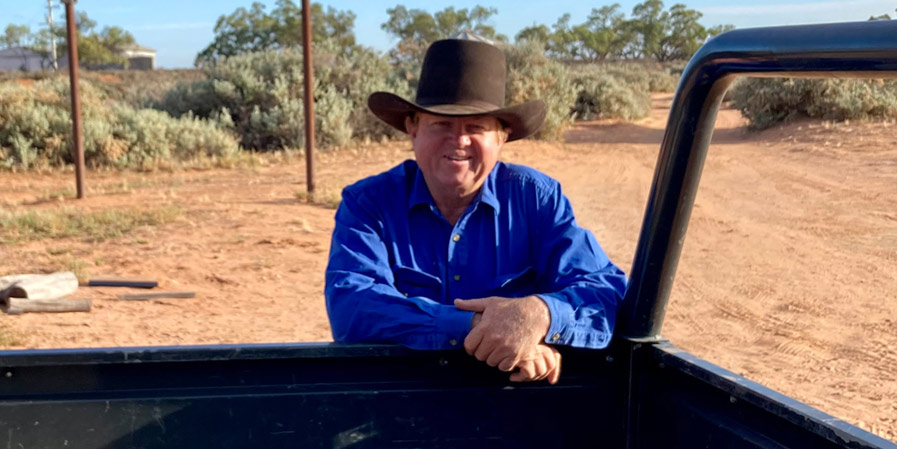
For Angus Whyte, who lives on a sheep and cattle station between Wentworth and Broken Hill in far western New South Wales, access to care has always come with distance.
Telehealth has changed that.
“I use telehealth for my GP in Mildura, specialists in Melbourne, and we have a Royal Flying Doctor Service (RFDS) medical chest, so I use it for that too,” Gus says.
While technology in his remote area is strong, he says there are options if it doesn’t cooperate.
“We’ve got Starlink now and some mobile coverage, but it’s still pretty new around our place.
“When tech doesn’t work, the go-to is always the landline—you can just switch and keep going.”
For many patients, having access to Rural Generalists (RGs) online is now part of everyday rural and remote practice. Telehealth reduces travel and connects to care sooner—but for the RGs, it demands a different way of practising medicine.
“It’s not just about having the technology,” Australian College of Rural and Remote Medicine (ACRRM) President Dr Rod Martin explains. “It’s about knowing how to deliver safe, high-quality care when technology doesn’t behave as expected.”
That distinction—between using telehealth and practising it well—is where ACRRM is leading the way.
ACRRM has long recognised that telehealth in rural and remote Australia is not a simple extension of face-to-face care. It requires RGs to adapt communication, sharpen clinical judgement, and manage risk in new ways — without a physical examination or reliable connectivity.
In response, ACRRM developed its Telehealth Clinical Skills Program, designed specifically for RGs working in rural and remote contexts.
The program focuses on what clinicians actually do in practice: how to structure a telehealth consultation, assess patients safely when information is limited, and respond when a connection drops mid-consultation.
“We’re seeing telehealth become a core part of rural and remote practice,” Dr Martin says. “That means we need to equip RGs with the clinical skills to use it safely, confidently and effectively.”
For patients like Angus, that capability is clear.
“My doctor’s very good with it,” he says. “He’ll have a registrar sitting in, and with permission, he records the session and uses AI for notes. I’m comfortable with that—it just makes everything smoother.”
He also recognises telehealth has its limits.
“I use it for things that aren’t critical or life-threatening. “You still need to know when to go in.”
That judgement—on both sides of the consultation—can be critical.
“I used it with the RFDS once for a swelling in my jaw,” Gus says. “They told me straight away to get to hospital as it could affect my breathing.
“That’s when you realise how important it is to have someone who knows what they’re doing on the other end.”
“With the cost and availability of fuel at the moment, telehealth just makes sense,” he says. “I feel bad using four hours’ worth of fuel just to go to town for a script. “Someone else in the community might need that fuel to plant a crop for their livelihood.”
Across rural and remote Australia, clinicians are building the skills to make telehealth work in real-world conditions—adapting in real time, managing uncertainty, and continuing care even when technology falls short. Because in rural and remote Australia, if the screen goes blank, the care still must continue.
Rural healthcare remains the lifeblood of the nation's health system, grounded in community connection, resilience, and adaptability. As a nursing Read more
Two innovative and community-driven programs are tackling the vast distances and limited services that shape health and daily life in Read more
Walking into Northcliffe Family and Community Centre for the first time, two occupational therapy students and their supervisor are met Read more
Across rural and regional Australia, communities are ageing, and the shortage of health professionals is increasingly evident. At Beaufort and Read more