
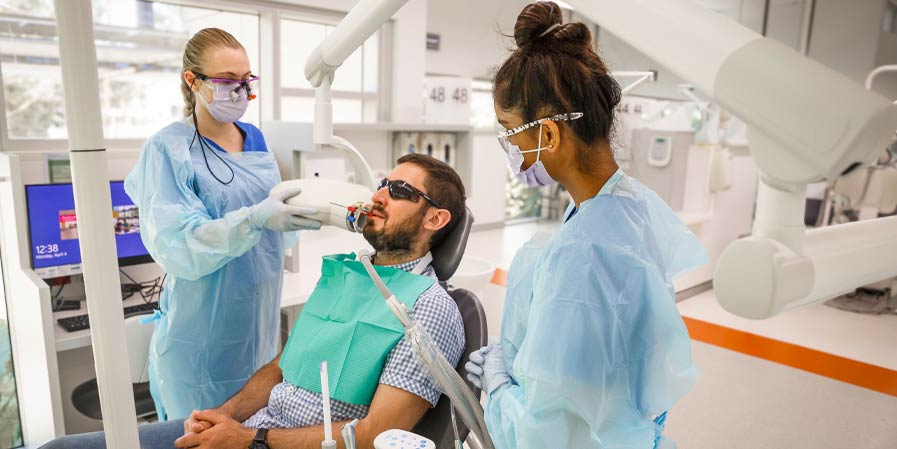
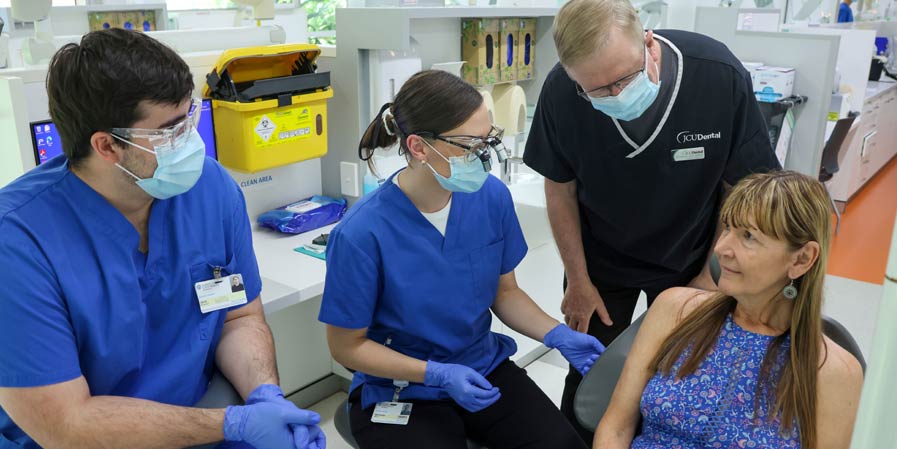
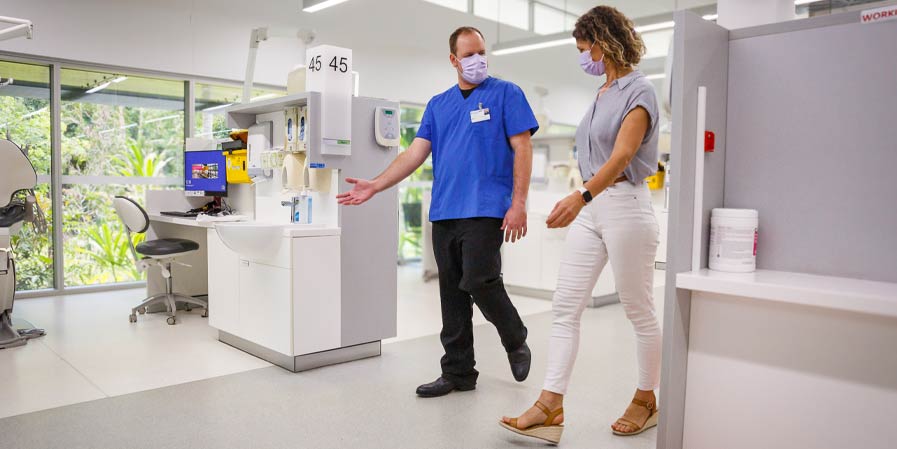
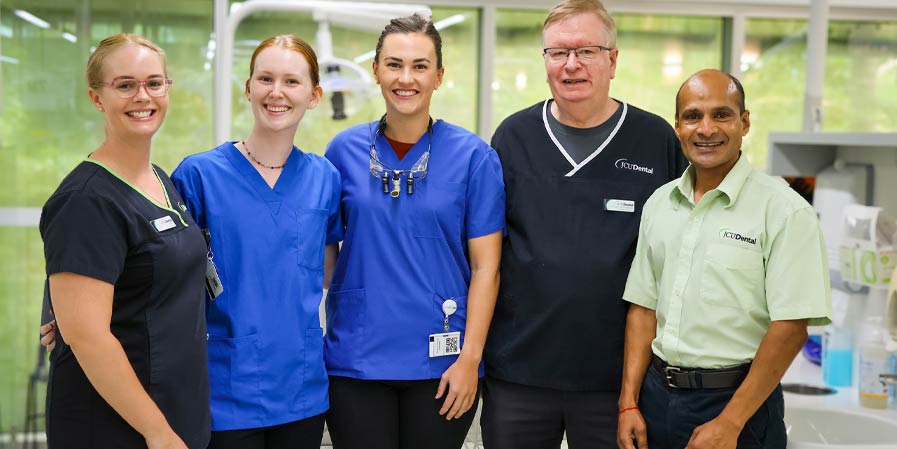
In northern Queensland, a community-based dental clinic is quietly addressing two of rural health’s biggest challenges: affordability for patients and workforce supply for the future.
For Judy in Cairns, that broader model comes down to something much simpler and that’s whether she can afford to see a dentist when she needs to. When she sits in the dental chair, she is not thinking about workforce pipelines or health budgets. She is thinking about whether she can afford her next appointment.
“I’ve always had a really good experience at the clinic,” Judy says. “The students I’ve had have been
fabulous and I’ve seen quite a few over the years. As a pensioner, it’s such an important service for
me. Any way to save a bit of money helps, and the care is always excellent.”
For more than a decade, the James Cook University Dental Clinics in Cairns and Townsville have
provided low-cost care to people like Judy. Since opening in 2009, more than 80,000 patients across
Far North and North Queensland have received treatment.
In small and regional communities, the cost of dental care can be a barrier. Public waiting lists are
long. Private fees can be out of reach. For many patients, the university clinic fills that gap.
One patient from Yarrabah summed it up simply: “I have my smile back, and I’m loving it.”
Rosie, who travelled from her Aboriginal community for treatment, says the experience changed
her perception of dental care. “The team at JCU Dental were incredible,” she says. “I usually don’t
like dentists, but I loved these guys.”
The clinic was established at a time when access to oral healthcare in northern Queensland was
falling behind demand. It was designed as a dual solution: provide affordable care to the community
while training dentists locally.
That local training matters. Students complete more than 2,000 hours of supervised clinical practice,
much of it delivered to patients who might otherwise delay care.
More than half of JCU graduate dentists now work in regional, rural or remote locations, strengthening
public dental services across the country. Head of JCU Dentistry Professor Peter Thomson says the purpose has been clear from the beginning.
“JCU’s dentistry program is unique in Australia, not just because of our focus on acquiring clinical
skills, but because of our mission to improve access to high-quality healthcare for our local and
regional populations,” he says.
“Since 2009, we’ve graduated over 900 dentists and treated more than 80,000 patients in our world-
class clinical facilities. As we look to the future, there is still much more work to be done as we
continue to prioritise oral health as fundamental to general health and wellbeing.”
For students, the clinic is also where they see the economic realities of rural health up close. Fifth-
year student Talyn Davies says the experience extends beyond clinical training.
“The amount that I’ve learned from people in the community, not just about dentistry but about life,
has been huge,” he says. “I’ve grown not only as a clinician, but as a person. JCU Dental gives young
students the chance to go back home and really change the oral health of their regions.”
Outreach placements expose students to patients who may have delayed care because of cost or
distance. Yasmine Doroudi says that shapes how future dentist’s practise.
“Working in outreach programs taught me how to explain complex dental topics in ways that make
sense to patients,” she says. “That experience helps me connect with people in the clinic now,
and it’s something I’ll carry with me into my career. These programs remind us that community
involvement is part of being a good dentist.”
Shelby, a Cairns local who recently suffered a severe tooth injury, says the clinic was her only
realistic option at the time.
“I was in shock and pain when I came in,” she says. “The fourth-year student who treated me was so
professional — he explained every step and made me feel comfortable. I’m so thankful for the care I
received.”
In rural and regional Australia, health services survive when they meet two needs at once: caring for
today’s patients and training tomorrow’s workforce. In northern Queensland, this clinic is doing
both.
Rural healthcare remains the lifeblood of the nation's health system, grounded in community connection, resilience, and adaptability. As a nursing Read more
Two innovative and community-driven programs are tackling the vast distances and limited services that shape health and daily life in Read more
Walking into Northcliffe Family and Community Centre for the first time, two occupational therapy students and their supervisor are met Read more
Across rural and regional Australia, communities are ageing, and the shortage of health professionals is increasingly evident. At Beaufort and Read more