

The day-to-day life of a rural GP can be tough.
From paediatric care to responding to emergency situations, they do it all for their community.
For Wongan Hills Medical Centre’s Dr Ajit Chaurasia, his life and the lives of patients 182 km north of Perth in Western Australia’s Wheatbelt, have been made easier by leveraging Artificial Intelligence (AI).
Dr Chaurasia’s tool of choice is Lyrebird Health, an AI scribe integrated into his system, helping with transcription, referrals and note-taking.
The 2021 WA Rural Health Excellence Awards GP of the Year, Dr Chaurasia said the tool listens to appointments, with consent from patients, and provides insights.
“It makes sure I’m always running on time, as it helps write up my patient notes, which means I can quickly move on to my next patient,” he said.
He said it can detect red flags raised by patients that he may miss and it can also distinguish between medical and non-medical topics discussed during an appointment.
“It makes sure you don’t miss anything,” he said.
One of its more impressive qualities, he said, is the ability to type out specialist referral letters while highlighting any relevant historical data within the GP’s system.
“I could be referring a patient to an ophthalmologist, and there could be data from 10 years ago when a patient had an eye injury. [It can] quickly incorporate that too,” he said.
The tool is not used by his first-year GP registrars, as Dr Chaurasia prefers they type their own notes and discuss with him if unsure about anything.
For registrars in their second year, they have restricted access and are only allowed to use notes, as Dr Chaurasia would still like them to learn how to type up referrals and gather data, while third-year registrars have full access.
Dr Chaurasia believed the tool has assisted in building trust between doctors and patients.
“I think most of them, they do get a feeling that ‘my doctor is keeping himself up to date’ and then ‘I trust this doctor’,” he said.
In March, medical students took part in the Wheatbelt Medical Student Immersion Program (WMSIP) coordinated by Rural Health West in partnership with Curtin University and The University of Notre Dame Australia.
Students were immersed in the life of rural medicine, and while attending Wongan Hills Medical Centre, they came face to face with Lyrebird.
“Most of them were quite receptive about it,” Dr Chaurasia said.
“They were pretty happy about it, how AI can make so much difference.”
One student, who was quite intrigued by Lyrebird, asked if it makes life as a rural GP less isolating.
“It does,” Dr Chaurasia said.
“It may not be a real person, I know it’s an AI, but I do feel like there is a companion to me.”
He believed it provided reassurance to the students that help will be there and eased the fear factor that may come with becoming a rural GP.
“They are not going to feel that isolated,” he said.
“They can work with this AI, which is not a human being, but it still gives you a feeling that you are with someone, and there is someone who is helping you, rather than feeling isolated.”
Dr Chaurasia believed “everybody,” particularly those living in rural areas, could benefit from the tool.
“Being a rural doctor, I know the time constraint we are always working on,” he said.
“Nearly 20 per cent of patients turn up on the day … so we get a lot of walk-ins.
“The Lyrebird, it saves the time for us.”
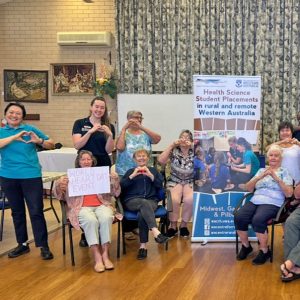
Rural healthcare remains the lifeblood of the nation's health system, grounded in community connection, resilience, and adaptability. As a nursing Read more
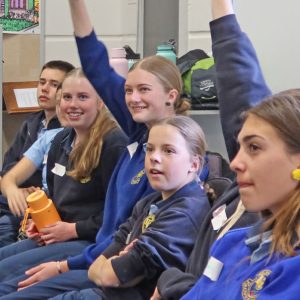
Two innovative and community-driven programs are tackling the vast distances and limited services that shape health and daily life in Read more
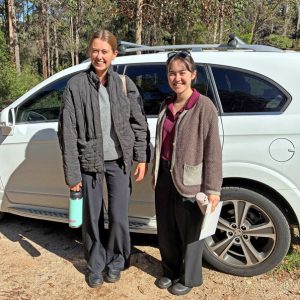
Walking into Northcliffe Family and Community Centre for the first time, two occupational therapy students and their supervisor are met Read more
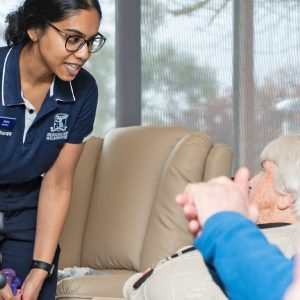
Across rural and regional Australia, communities are ageing, and the shortage of health professionals is increasingly evident. At Beaufort and Read more