
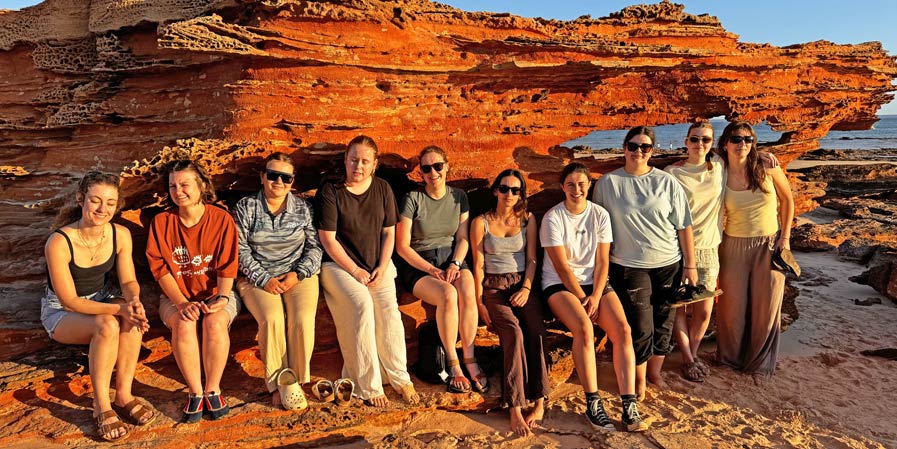
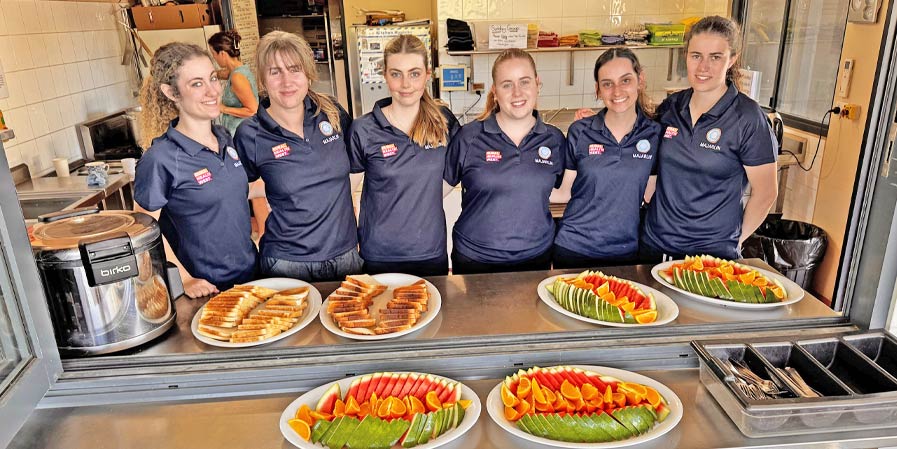
Since 2018, the University of Notre Dame Australia’s Majarlin Kimberley Centre for Remote Health has helped shape the future of healthcare in one of Australia’s most remote corners. Based in the Kimberley region in northern Western Australia, the University Department of Rural Health (UDRH) has supported competency-based allied health placements, primarily for final-year students ready to enter the workforce.
The Kimberley faces challenges. Workforce shortages, recruitment hurdles, limited supervision and vast distances create barriers to hosting health student placements, where supervision capacity and service availability are stretched. For foundational year students, the challenges increase. The closest university to study allied health is over 2,000 kilometres away and early-year placements are typically short, local and run alongside academic units, making remote experiences nearly impossible to coordinate.
Yet the Majarlin team believed early-year placements are worth it.
“We know that if we can get students here early, to see what life is like in the Kimberley, meet the community and understand the culture and lifestyle, they’re more likely to come back,” said Nikki Hulse, Occupational Therapist. “Not just for future placements, but for work.”
In 2023, the Majarlin team took a bold step. Before placing more students into the stretched remote health system, they asked: What’s making it hard to host students here?
They consulted occupational therapists across the Kimberley. The feedback was frank. Many stated that students arrived underprepared for remote practice realities. Students struggled with cultural competency, resilience and soft skills needed in complex community settings. The formal assessment process added stress to clinicians managing high caseloads.
Rather than back away, Majarlin saw an opportunity to rethink the placement model.
Working in collaboration with Australian Catholic University (ACU), they developed a four-week, non-assessed volunteer community immersion program, designed not to test students, but to prepare them. The idea was simple- ease the pressure on local services while giving students a meaningful, hands-on introduction to remote health and community life through volunteering.
In 2024 twelve occupational therapy students arrived in the Kimberley ready for something far beyond the classroom.
They weren’t here for exams or formal assessments. Instead, they came to volunteer, immersing themselves in the rhythm of community life across one of Australia’s most culturally rich and remote regions.
The students took part in a unique four-week program designed by Majarlin, working in aged care homes, supporting people experiencing homelessness and assisting families facing food insecurity. Each day brought new lessons not just in service, but in connection, compassion and cultural understanding.
Their journey began with cultural safety training and continued with deep engagement in community events and one-on-one conversations with local allied health clinicians. Pastoral support was woven throughout, creating a safe space for reflection, growth and shared experience.
For many students it was their first taste of remote practice, but for some, not their last. One student is completing their third-year placement this year, with two students seeking placement next year.
“It was challenging, eye-opening and incredibly rewarding,” one student reflected. “It’s changed how I see my future in health.”
Embedding students early in community work—without the pressure of grades or formal placement—the program is not only shaping better health professionals but also building bridges between future practitioners and the remote communities who need them most.
By shifting the focus from clinical competency to cultural and community immersion, Majarlin believes it is laying the groundwork for a stronger, better-prepared allied health workforce in the remote north.
It’s a long game, but one that holds the promise of a stronger, more sustainable rural health workforce. By planting the seed early, Majarlin hopes to grow a generation of allied health professionals not only equipped to work in remote Australia but inspired to.
For further details contact Nikki Hulse [email protected]
At the Whyalla Hospital’s foyer every weekday morning, greetings & conversation hums between customers and volunteers, at a booth located Read more
COTA QLD has been advocating for over 60 years to ensure all older people’s rights, needs and interests are heard. Read more
Let me set the scene with a real-world example of commercial realities that directly impact a small remote aboriginal town Read more

What do sharing power, building trust, improving health outcomes, and empowering communities have in common? They’re all types of impact Read more