

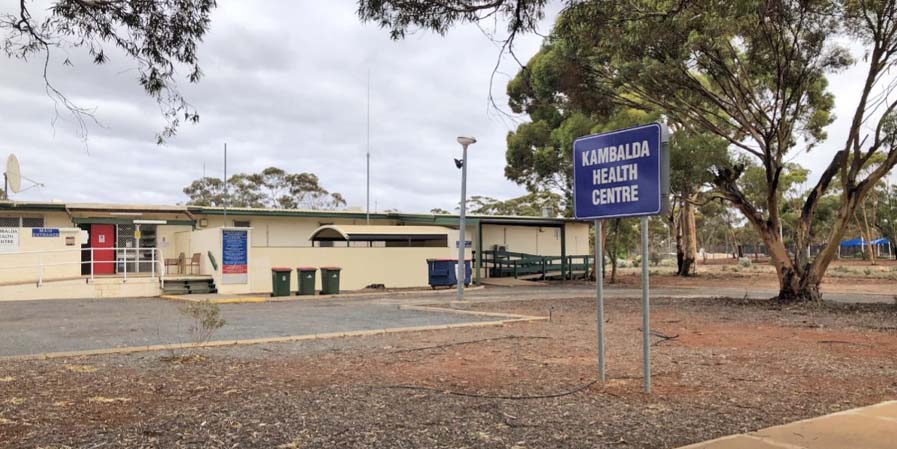
Having worked in a small WA local government, I’ve seen firsthand the hard choices Councillors face when balancing community expectations against limited budgets. Among the toughest is deciding whether to subsidise an increasingly fragile GP service or direct funds toward traditional responsibilities like roads, waste and water. Both underpin community wellbeing, yet few budgets can stretch to meet both without risk.
Across rural and remote WA, councils are being drawn into funding and delivering health care in ways that are economically inefficient, structurally fragile and ultimately unsustainable. The fundamental problem is scale. A medical clinic requires buildings, equipment, emergency capability and after‑hours coverage regardless of whether a town has 500 or 50,000 residents. When those fixed costs fall on a small ratepayer base, the financial load becomes disproportionate and inequitable.
Distance adds another layer. Residents often travel hundreds of kilometres for specialist appointments or hospital care, bearing hidden costs in fuel, accommodation and lost income. When councils divert scarce rate revenue to retain a GP or visiting nurse, they are effectively subsidising access for their community through one of the narrowest and least flexible revenue sources available—shire rates.
This localised funding model exists within a national system already distorted by vertical fiscal imbalance. The Commonwealth holds the major tax levers, the States deliver most frontline services, and both shape health policy. Shifting responsibility to local governments creates a third level of obligation without the matching financial tools or legislative mandate.
For small local governments with modest budgets and vast land areas, the risks are acute. Each dollar spent on health is a dollar unavailable for essential services like roads or environmental health. Councils become funders of last resort while state and federal governments, with more efficient and progressive tax bases, retain the policy control and much of the political credit for system-wide announcements.
Over time, this dynamic normalises cost shifting. What begins as an emergency response to prevent the loss of a local GP becomes a standing budget item. Once a council demonstrates it can “fill the gap,” pressure on State and Commonwealth agencies to develop sustainable system solutions weakens, leaving local budgets permanently stretched.
Labour markets compound the problem. Recruiting health professionals to remote towns requires costly incentives—housing, relocation, professional development and often job opportunities for partners. Competing with State services and the private sector is difficult for local governments, which are not structured as health employers. The departure of a single clinician can unravel years of investment while sunk facility costs remain.
Moreover, when every council designs its own workaround, inefficiencies multiply. Administrative overheads rise, purchasing power diminishes and service quality fluctuates. Economic logic suggests that allowing access to essential health care to depend on the fiscal capacity or risk tolerance of an individual shire undermines both efficiency and equity. Two towns with identical needs can end up with vastly different services simply because one can afford to overextend.
A more rational approach would see higher tiers of government, with broader and fairer tax bases, assume responsibility for the fixed costs and systemic risks of rural and remote health. Local governments still have an important role—as advocates, planners and partners—but they should not be the bank or the provider of last resort. Their contribution is best directed to enabling land and infrastructure, ensuring cultural safety, and helping coordinate regional governance, rather than underwriting core clinical services.
At its heart, the question is one of equity and economic logic: should access to essential health care depend on the financial strength of a shire or on a coordinated system designed to share costs and risks across the state?

In rural, regional and remote Australia, the economics of health care are rarely straightforward. Distance adds cost. Dispersed populations strain Read more