

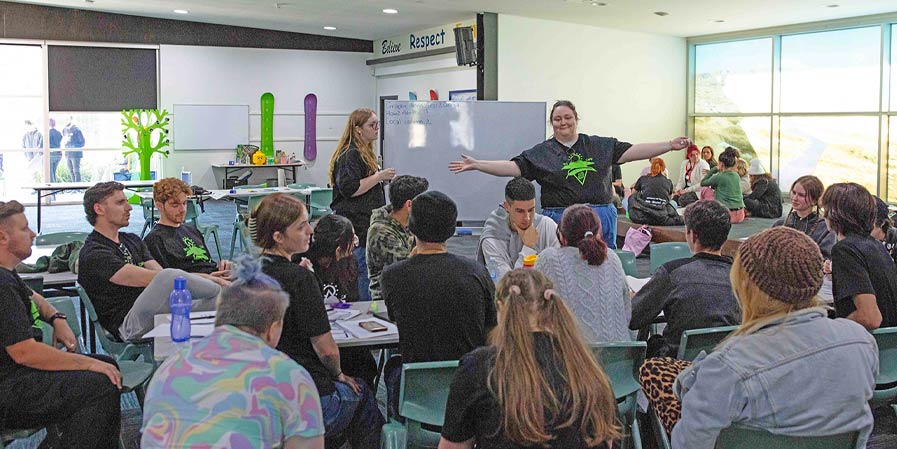
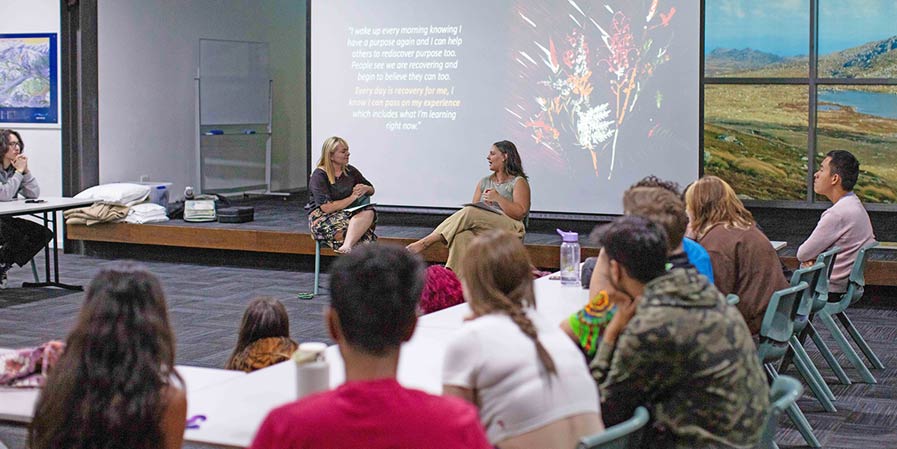


In April 2025, members of the South Eastern NSW Peer workforce spoke for the first time at a headspace Youth Reference Group camp, attended by over 80 young people. Peer Workers shared stories about what Peer Work is, what it means to them, and how they came into the profession. They spoke openly about the joys of the work – connection, purpose, and impact – and some of the challenges that come with holding lived experience in service settings.
This camp was the first time many had heard of Peer Work or seen themselves reflected in a professional role. For some, it was a moment of realisation their lived experience wasn’t a disqualifier, it was a qualification. Several young people shared they had previously felt discouraged about working in mental health, believing their mental health challenges would prevent them from meeting the requirements of university admission and maintaining workloads. Learning about Peer Work illuminated a pathway to entering employment in the mental health workforce and contributing to a sector they are experts in. Many young people said the workshop gave them hope for their future, and several have since enrolled in formal Peer Work training.
I shared my own experience as the Regional Peer Workforce Program Lead at the camp. As a young person I was deeply impacted by experiences of mental ill-health. My family tree was wrapped up in mental ill-health and a number of tragedies, and I experienced my own debilitating challenges with keeping well, presenting to services for the first time at the age of 10. I was repeatedly let down and longed for more compassionate care. It was clear to me I wanted to work in and contribute to the mental health sector. But at the time, the only pathways I was aware of were disciplines like psychology and social work, I hadn’t heard of Peer Work. I didn’t know what a Peer Worker was.
When I finally discovered Peer Work it felt like coming home. It was the first time I’d seen a professional role where your life experience wasn’t just relevant, it was the core qualification. All the things I had been through, that I thought were barriers to the life I wanted, started to look more like bridges to new opportunities and transformed the way I viewed myself. In my role I now have the opportunity to support people to enter the Peer Work profession. Ensuring we have a focus on engaging young people is an important pillar of workforce development, supporting Peers to grow with and stay in the career, enabling maturation of the workforce for future years.
The benefits of Peer Work go far beyond workforce development, for many young people, engaging with headspace is their first contact with the mental health system. At a time in their lives when it is most impactful, the presence of Peer Workers ensures these initial encounters are grounded in empathy, authenticity, and relatability. It allows young people to hear directly from someone who has experienced mental ill-health and recovery and shares the message they are not alone and healing is possible. In South Eastern NSW, there has been significant investment in embedding Peer Work within commissioned headspace services. From 2024-2025 852 young people were connected to a headspace Peer Worker, representing 21.9% of service delivery for those seeking mental health supports through headspace.
To empower Peer Workers last year COORDINARE partnered with Orygen to fund the Certificate IV in Mental Health Peer Work, supporting Peer Workers to understand the distinct nature of their role and to deliver support that is trauma-informed, rights-based, and relational.
The initiatives in SENSW are about creating pathways for young people to turn their lived and living experiences into something powerful that brings hope to others and meaning to their own journey. To find out more visit www.coordinare.org.au/peerwork.

In rural towns across Australia, playgroups are more than just a space for children to play. They serve as vital Read more

For 100 years, Royal Far West (RFW) has gone beyond improving the health and wellbeing of country children, providing the Read more

Access to quality healthcare is essential at every stage of life—no matter where you live. For many rural and remote Read more

Throughout 2024 clinicians spoke with families across Western NSW LHD who are caring for children with complex feeding and eating problems. Read more