


Growing up as a proud Wotjobaluk woman, I have always understood that health is connected to much more than illness. It is connected to family, culture, Country, identity and community. Yet too often, conversations about First Nations health are framed through what is missing health disparities, statistics and disadvantage rather than recognising the strength, resilience and knowledge that exists within our communities.
As an Aboriginal medical student, I have often navigated the tension between challenging harmful stereotypes and staying true to my own story. There can be an expectation to represent success in a way that proves First Nations people can overcome the barriers placed before us. For a long time, I felt pressure to redefine myself beyond the stereotypes imposed on First Nations people. My identity, my experiences and my connection to community are not barriers to medicine they are what shape the kind of doctor I hope to become.
This understanding has grown through learning within Bendigo & District Aboriginal Co-operative (BDAC).
Prior to my rural health placements, I often thought of healthcare through a clinical lens: diagnosing disease, managing conditions and providing treatments. While these aspects are important, my experiences within BDAC have shown me that medicine is much broader. Medicine is also found in relationships, culture, connection and community.
One of the most powerful lessons I have learned has come from watching community outside the consulting room. Seeing the impact of community groups, watching community members connect through the Men’s Shed and Therapeutic Day Rehab, sharing stories, laughter and knowledge, and seeing people welcomed into a space where they feel they belong reminds me that healing is not confined to prescriptions or procedures.
This is what real medicine looks like.
It is seeing community members thrive because they have opportunities to connect, move, share and support one another. It is recognising that wellbeing is built through relationships and that health is not something that exists separately from culture, family and identity.
Aboriginal Community Controlled Health Organisations are built on this understanding. They are services led by First Nations communities, for First Nations communities, grounded in the principle of self-determination. They recognise that communities are not simply recipients of healthcare they are leaders, decision-makers and experts in their own health.
For medical students, learning within these environments provides an opportunity to understand healthcare differently. Students learn alongside Aboriginal Health Practitioners, doctors, nurses and community workers who demonstrate that effective healthcare begins with listening. They learn that cultural safety is not simply about knowing First Nation history or completing training modules, it is about creating spaces where First Nation people feel respected, understood and empowered.
These experiences challenge the idea that First Nation health is a problem to be fixed. Instead, they highlight the importance of addressing the systems and structures that create barriers while celebrating the strengths already present within communities.
For me, this has changed how I understand Black excellence. It is not about being exceptional to prove that First Nation people belong in spaces like medicine. It is not about rising above stereotypes. Black excellence is seeing our Elders thriving, our families supported, our young people pursuing their aspirations and our communities having the power to shape their own futures.
As Australia continues to address rural health inequities, partnerships between universities and Aboriginal Community Controlled Health Organisations are essential. They do more than train future doctors they create opportunities for students to learn from communities and understand that healthcare is strongest when it is built through trust, respect and partnership.
For me, becoming a doctor is not about standing apart from my community. It is about standing alongside it. It is about carrying forward the knowledge, strength and resilience that has always existed within First Nations communities and contributing to a healthcare system where First Nations voices are recognised as leaders. Because sometimes the most important medicine is not found in a hospital room. Sometimes it is found in community.
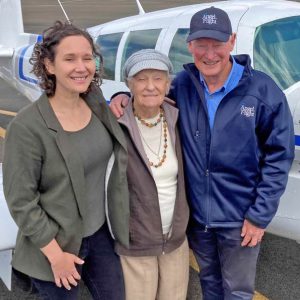
From the far reaches of Cape York to the rugged beauty of Kangaroo Island, Angel Flight is proud to have Read more
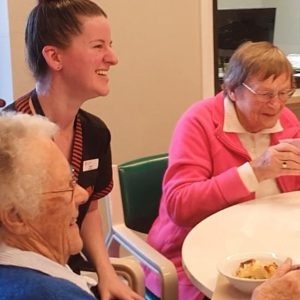
Tresna is 75 years old and resides in Deniliquin, an idyllic country town (MM4) in southern New South Wales, nestled Read more
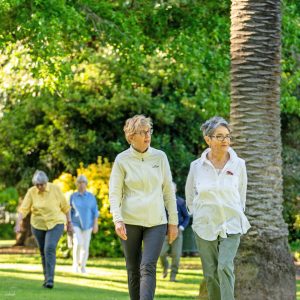
For many older people in rural Australia, staying connected, physically active, and mentally sharp can be challenging. Long distances, fewer Read more
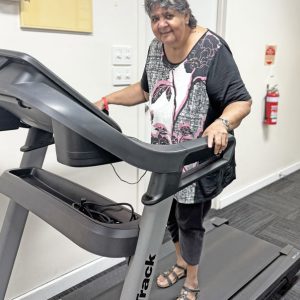
Every Monday morning, Gloria walks into her Darwin physiotherapy clinic with a warm smile and a friendly greeting for each Read more