

When Dr Adrian Cameron talks about rural medicine, he speaks less about the challenges and more about the opportunities.
For Adrian, being a rural GP in Portland, Victoria means caring for people across every stage of life and developing strong relationships within the community. It is those relationships, and the responsibility that comes with them, that led him to tackle a growing problem he was seeing among his patients.
Too many people were struggling to access timely ear health care.
Rural communities face higher rates of hearing loss than their metropolitan counterparts, driven by a combination of geographic isolation, workforce shortages and reduced access to healthcare services. The National Rural Health Alliance has identified hearing loss as a significant rural health issue, affecting millions of Australians and contributing substantially to disability and reduced quality of life.
For First Nations communities, the impact can be even greater. The Australian Institute of Health and Welfare reports that three in 10 First Nations children aged 7–14 have hearing loss, rising to four in 10 among those living in remote areas. Hearing loss during childhood can affect language development, educational engagement, cultural connection and long-term wellbeing.
These challenges were not simply statistics to Adrian.
They were reflected in the patients he saw every week.
Working at Active Health in Portland Victoria, Adrian became increasingly concerned about the number of patients experiencing ear health problems and the difficulty many faced in accessing specialist services.
“We’ve been wanting to offer this service for so long,” Adrian said. “Like many rural practices, we simply didn’t have the funds.”
Traditional ear syringing remained the most common treatment available locally, despite being considered less effective and often uncomfortable for patients. Many people needing more advanced treatment faced long waits or significant travel to larger centres.
Rather than accept the situation, Adrian began looking for alternatives.
His research led him to the Vorotek Ear Loupe, a specialised device that provides clinicians with a stereoscopic view of the ear canal and enables microsuction procedures to be performed safely and accurately. He also discovered a funding opportunity through Rural Doctors Foundationthat could help make the equipment accessible to his practice.
The introduction of the ear loupe transformed the way ear health services could be delivered at Active Health.
The practice trained two nurse practitioners to use the equipment and established a weekly clinic dedicated to ear health. The service now supports both children and adults, providing local access to treatment that was previously unavailable within the community.
The benefits extend well beyond convenience.
Patients can receive treatment closer to home, avoid lengthy travel and access care from clinicians they already know and trust. The technology also allows for more precise examination of the ear canal and eardrum, supporting earlier diagnosis and treatment of conditions such as impacted ear wax, otitis externa and foreign bodies.
For a rural community like Portland, this represents a significant improvement in access to care.
The impact became clear almost immediately.
Adrian recalls a patient experiencing chronic otitis externa who had previously travelled to Melbourne to access treatment.
“Just the other day, our nurse practitioner Kam used a combination of microsuction and ointment instillation to treat a case of otitis externa. The patient had previously been travelling to Melbourne for this treatment, and it made a big difference to him to be able to have this done here in Portland,” Adrian said.
For the patient, it meant avoiding hours of travel and receiving treatment within their own community.
For the practice, it demonstrated how relatively simple investments in equipment and training can significantly improve access to care.
Stories like Adrian’s highlight an important lesson for rural health.
Improving health outcomes is not always about creating new services. Sometimes it is about strengthening the capacity of existing healthcare teams to provide care locally.
Across rural Australia, clinicians continue to manage increasing demand while navigating workforce shortages and limited resources. Supporting healthcare professionals with the right equipment, training and practical solutions can help bridge gaps in access, particularly for communities experiencing the greatest barriers to care.
For priority populations, including First Nations communities, earlier diagnosis and treatment of ear disease can have lifelong benefits. Preventing avoidable hearing loss helps children participate more fully in education, strengthens communication and supports broader health and wellbeing outcomes.
For Adrian, the ear loupe is more than a piece of equipment.
It is a tool that allows his practice to provide better care, closer to home.
And for the people of Portland, it is proof that small changes can make a meaningful difference.
For information about this program or to express interest in receiving a free Ear Loupe for your rural practice, please contact Rural Doctors Foundation at [email protected]
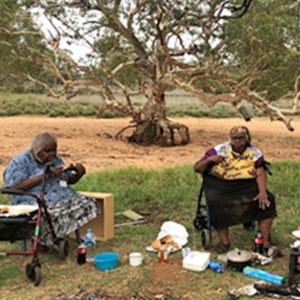
The Early Intervention Healthy Ageing Program, funded by the Australian Government and delivered through Northern Territory Primary Health Network (NT Read more
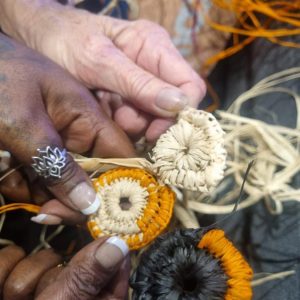
During 2025 NAIDOC staff at Northeast Health Wangaratta (NHW) had an opportunity to participate in a group weaving activity. This Read more
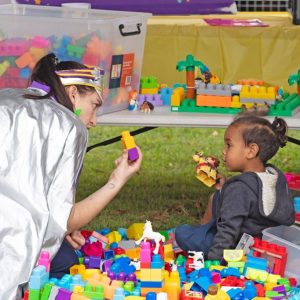
Australian rural healthcare practitioners face well-documented challenges like professional isolation, expanded scopes of practice, staff shortages, and limited learning opportunities. Read more
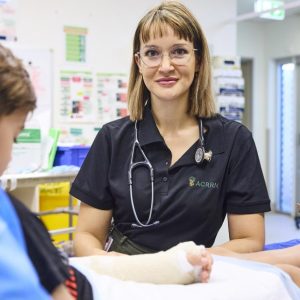
Dr Julia-Rose Satre grew up between Broome in Western Australia and Cairns in Far North Queensland — two regions far Read more