


The Australian Institute of Health and Welfare has put a number on something rural Australians already sense. Five years after a cancer diagnosis, 63 per cent of people in major cities are still alive. In outer regional and remote areas, that drops to 60 per cent, and in very remote Australia it falls to 55 per cent. Same disease, different postcode, different odds.
In November 2023, the Federal Government asked the McGrath Foundation to close part of that gap. It funded a supportive cancer nursing program for every Australian facing any type of cancer. Not only breast cancer. Not only the capital cities. Everyone.
The Foundation engaged our team at Ethicol to lead the co-design work behind the model of care. We listened to people living with cancer, to the carers beside them, and to the nurses who hold the system together. By the end, we had recorded more than 960 points of contact.
Two in five Australians will hear a cancer diagnosis before they turn 85. Someone in a major city with a common cancer has a reasonable chance of being linked to a specialist nurse who knows their name, tracks their appointments and answers the phone at nine at night. Someone with a rare cancer, three hours from the nearest regional centre, often has nobody in that role at all.
So, we built the co-design process to make sure rural and remote voices shaped the model rather than reviewing it after the fact.
We ran consultations from Alice Springs to Melbourne. Community representatives led many of those conversations themselves, because people tell the truth more readily to someone who has lived the same thing. We also spoke with clinicians across the whole cancer journey and with the organisations that quietly fill the gaps.
Rural participants were clear that distance is only part of the story. They talked about the cost and exhaustion of travelling for treatment, then arriving home with nobody local who understood the plan. They wanted one person who stays with them rather than starting again with each new face. They wanted contact by phone or video that works with the connectivity they actually have, and a nurse who knows what exists in their own town rather than a referral four hundred kilometres away.
We followed four stages. We discovered what people were living with. We designed the components of care that mattered most at each point of the journey. We then asked experts and community members to weigh those components over several rounds of feedback until a clear picture emerged, and we tested that picture in workshops against the realities of delivering care. Finally, we debriefed, building an implementation plan with the McGrath Foundation team and asking every stakeholder what the process had been like for them.
The advisory groups endorsed the result and told us it genuinely reflected what they had said. That endorsement mattered more to us than any other measure.
This has been the most rewarding work of my career, and the most humbling. It taught me what it takes to listen and to hand over control to the people who matter most. I do not think of myself as someone who holds power over others, but letting go was still hard. Watching community representatives lead consultations and bring back stories we would never have heard ourselves was worth every uncomfortable moment.
As this model moves into implementation, it will reach people in places that have waited a long time for it. Supportive cancer nursing should not be a privilege of geography. It should be a right.
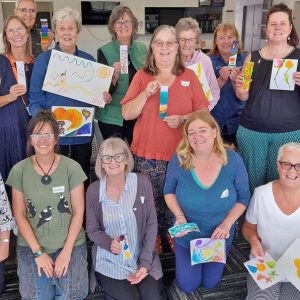
People affected by cancer in rural and regional communities need access to support at all stages of the cancer care Read more

It’s 4am, and I’ve been awake for 22 hours. My shift started at 2:30pm and the surgeries haven’t stopped all Read more
Growing up in rural Queensland instilled in Dr Prue Wallin resilience, compassion, and a deep respect for community—values that shaped Read more
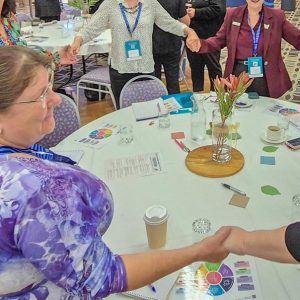
In the Murrumbidgee region, health professionals are doing remarkable work. Across vast distances and complex systems, they deliver person-centred care, Read more