
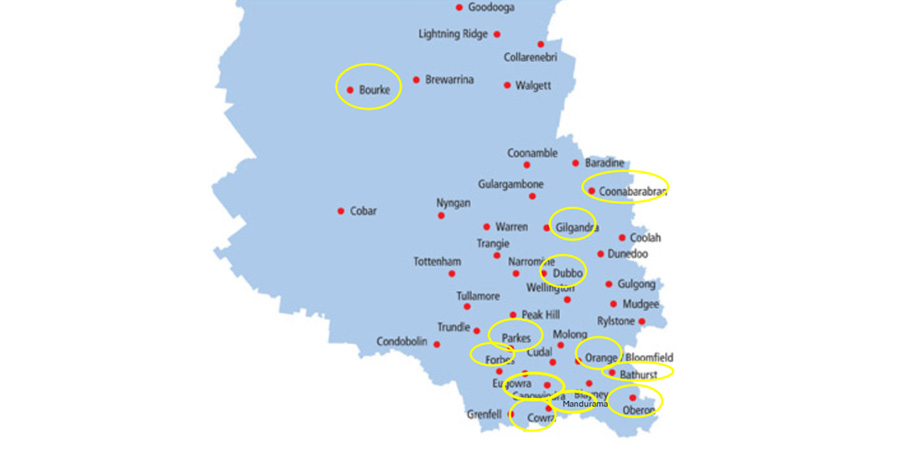

Throughout 2024 clinicians spoke with families across Western NSW LHD who are caring for children with complex feeding and eating problems. Clinicians heard stories about children’s journeys to access services in rural NSW. Many families felt frustration and despair when attempting to access services, with one parent stating, ‘my child has had problems with food, eating and gaining weight for a long time, we have tried everything, we can’t find answers”. Others had received conflicting advice, felt dismissed, with referral often only made to an individual therapist rather than joint services. Local clinicians in rural NSW also spoke about their experiences of providing care to those with lived experience of complex feeding and eating problems. While clinicians were willing to work with this group, there was a lack of knowledge about how to assess and treat feeding and eating problems such as Avoidant Restrictive Food Intake Disorder (ARFID).
ARFID is a serious eating disorder that often starts in childhood and can be associated with medical complications like gastro-intestinal difficulties and poor bone health. People may have difficulty gaining weight due to low volume of food and may have nutritional deficiencies due to poor variety of food eaten. ARFID may also affect relationships, social eating and school attendance as eating may overwhelm the person. Untreated ARFID can have longstanding and devastating effects on the individual’s life and place pressure on medical services. Timely assessment of kids can improve outcomes, but unfortunately there is limited access to suitable multidisciplinary services in rural NSW.
Having heard requests from local families and clinicians for additional services, senior mental health staff in Western NSW LHD supported a 12-month district-wide ARFID Clinic pilot to provide high quality multi-disciplinary virtual care for people across the lifespan with, or suspected of, ARFID. The team consisted of a clinical psychologist, dietitian, and speech pathologist provided people with flexible service options as close to their homes as possible. In a sense, clinicians recognised that families in rural and remote communities did not have access to local care, and brought the service to them, either virtually or in a regional area closest to their home. To improve placed based access to ARFID care in the future, the clinic supported a local clinician to observe all sessions.
The ARFID Clinic utilised assessment strategies such as feeding observation, clinical interview with families, questionnaires, blood collection, 3-day food diary, and nutritional analysis to assess the nutrition, swallow safety, medical and mental health factors associated with the feeding/eating challenges. Local clinicians were invited to observe all sessions to increase their confidence and knowledge about providing care to those with complex feeding/eating problems.
Kids diagnosed with ARFID were found to have significant malnutrition, vitamin deficiencies, and co-occurring medical and mental health problems with the clinic team and local clinician managing their care. This included weight gain, correcting vitamin deficiencies, reducing mealtime stress, increasing volume and range of foods and referral and advocacy to treat other co-occurring conditions.
Feedback from families who accessed the clinic was overwhelming positive, with comments like: “it’s a game changer’, ‘They calmed the system down’, ‘This is a real condition, it is not my fault’, ‘I can learn to eat differently, I am no longer the skinny kid, I’m eating more, I’m gaining weight”. Clinicians who observed the clinic said their confidence to treat ARFID improved and their knowledge of the presentation increased. Overall, the ARFID clinic was well accepted by both the clients and clinicians who accessed the service. The flexible service delivery was strongly accepted by families, liking the non-judgemental client-focused care that validated their journey to care and alleviated their distress and feeding and eating problems.

In rural towns across Australia, playgroups are more than just a space for children to play. They serve as vital Read more

For 100 years, Royal Far West (RFW) has gone beyond improving the health and wellbeing of country children, providing the Read more

Access to quality healthcare is essential at every stage of life—no matter where you live. For many rural and remote Read more

In April 2025, members of the South Eastern NSW Peer workforce spoke for the first time at a headspace Youth Read more