

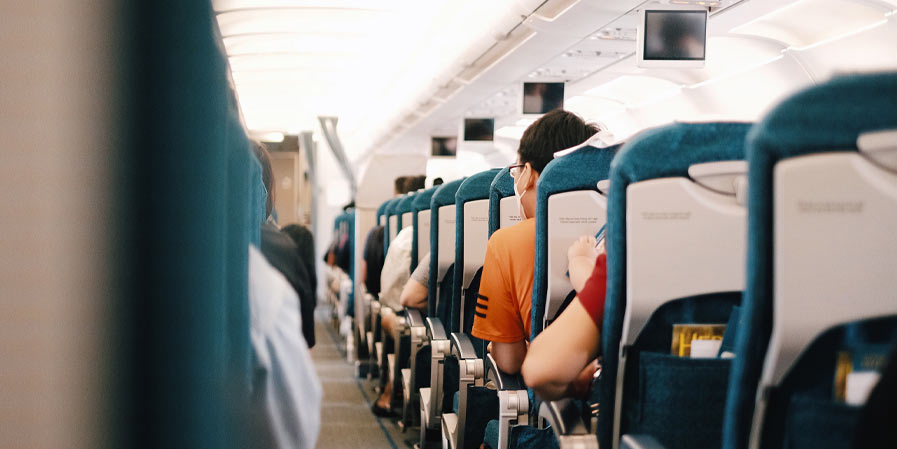
Margaret lives a long way from a tertiary hospital. After a cardiac scare last winter, her specialist referred her to a capital city for surgery. Like thousands of rural Australians, the path to her operating theatre ran through her local regional airport.
For people in the bush, air travel isn’t a holiday. It is the care pathway. The specialist services that keep regional patients alive — diagnostic imaging, oncology, cardiac surgery, complex paediatrics — sit in our capital cities. Getting there usually means a flight. And before any of those patients board, someone has to decide whether they are well enough to fly.
That decision matters more than most people realise. A commercial cabin sits at a pressure equivalent to roughly 8,000 feet of altitude — unremarkable for a healthy traveller, but for someone recovering from surgery, on home oxygen, or recently discharged from coronary care, it can be the difference between arriving safely and being diverted for an emergency landing.
That is why every Australian airline has its own medical clearance requirements. Patients are asked to declare conditions and equipment in advance so the airline can put the right supports in place — wheelchair assistance from the kerb, in-flight oxygen approved and loaded, the cabin crew aware that a clearance is on file. Crucially, the ultimate approval decision sits with the airline’s medical team, not the treating clinician. Industry data shows that passengers who submit a clearance in advance are not the ones experiencing in-flight medical emergencies. Pre-travel clearance is one of the most effective risk mitigators we have.
And here is where rural patients quietly get let down: the current process is almost entirely paper. A clinician hand-completes a multi-page PDF, often a different one for each airline. It is printed, signed, scanned and emailed — and then everyone waits. Forms must reach the airline’s medical team several days before travel for review and approval. When that timeline slips, the patient pays. Some are denied travel at the airport while their clearance is reviewed in full; others miss the surgery window they have been waiting months for. A week later, flying home, the same patient submits the whole thing again.
Most Australians would be surprised that around 60 per cent of airline medical clearances begin in a hospital, the great majority for travel to and from regional towns. The administrative load sits squarely on rural clinicians and their patients.
There is another quiet gap. Few Australian doctors receive formal training in patient fitness to fly assessment. Most learn it the way Margaret’s GP did — by reading the form in front of them and doing their best. The basics — what changes at altitude and who is at risk — should be familiar territory for any clinician sending patients on a plane. The training has not caught up with the reality of rural practice.
The good news is that the next chapter is being written now. The same digitalisation transforming rural health is starting to reshape medical clearance. A guided digital form replaces the paper. Clinical logic, drawn from industry guidelines and clinical evidence, auto-approves straightforward cases on the spot and routes complex ones to the airline’s medical team for review. What used to take days settles in minutes, with every stakeholder seeing the same record at the same time.
For Margaret, that means turning up to the regional airport knowing her oxygen has been approved, her wheelchair is waiting, and her clearance will not be the thing that delays her surgery. That is what good rural health technology should do. Quietly, in the background, it should make the journey to care the easy part.
Rural healthcare remains the lifeblood of the nation's health system, grounded in community connection, resilience, and adaptability. As a nursing Read more
Two innovative and community-driven programs are tackling the vast distances and limited services that shape health and daily life in Read more
Walking into Northcliffe Family and Community Centre for the first time, two occupational therapy students and their supervisor are met Read more
Across rural and regional Australia, communities are ageing, and the shortage of health professionals is increasingly evident. At Beaufort and Read more