
In rural and remote healthcare settings, where resources are limited and time is critical, innovative approaches to training can mean life or death.
At Alice Springs Hospital, a simulation-based training program is equipping junior doctors and medical students with the skills to respond effectively to deteriorating patients in high-pressure, resource-constrained environments.
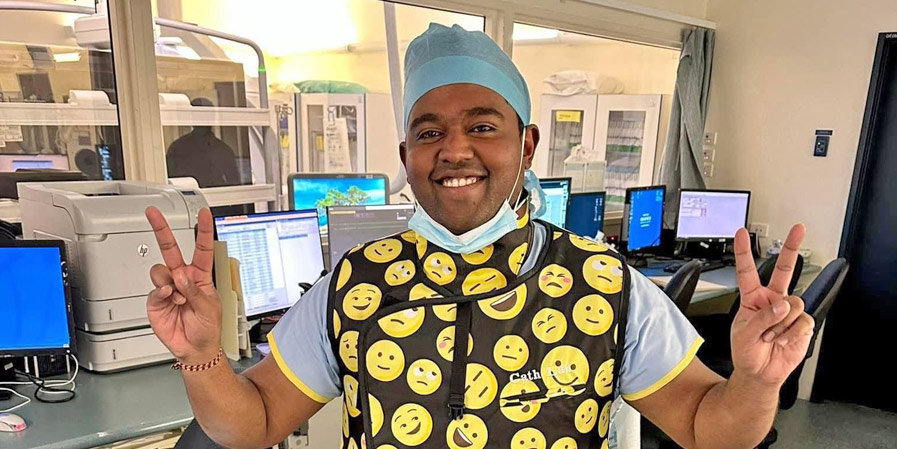
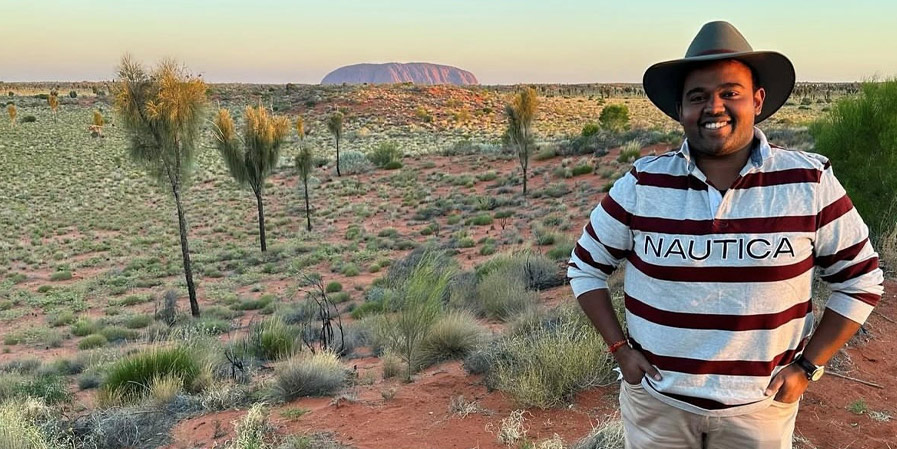
During his time as a Cardiology and General Medicine Advanced Trainee at Alice Springs Hospital in 2023 to 2025, Dr Anosh Shane Sivashanmugarajah developed the training program to support regional and remote clinicians to act quickly in emergencies.
“Many rural and remote communities have limited resources, are geographically isolated, come from low socio-economic backgrounds, have a functional view of health, an external locus of control, language barriers and workforce shortages,” Dr Sivashanmugarajah said.
“Following insightful experiences in several regional and rural environments, including Alice Springs, I wanted to launch a program where junior doctors and medical students are equipped with a basic skill set, can come up with an initial approach and know how to work effectively and efficiently in a possibly under-resourced team,” he added.
“Moreover, they needed to learn how and when to ask for help early when looking after vulnerable patients.”
The program centres on structured, scenario-driven simulations that replicate real-life medical emergencies, allowing participants to translate theory into practice in a safe but time-critical environment. It was embedded into teaching time and co-designed with Advanced Trainees and Registrars in Alice Springs to ensure longevity and relevance.
“Deteriorating patient simulation scenarios allow you to efficiently relate theory to clinical practice in a time-critical environment to ensure best outcomes for every patient,” Dr Sivashanmugarajah said.
“These scenarios, in addition to building confidence, also foster teamwork, leadership, communication and prioritisation of issues and tasks. Ultimately, they better prepare you to cope with the demands of a real-life situation, where you have a patient deteriorating in front of your eyes. Practice is essential and facilitating deteriorating patient simulation programs across all healthcare settings is crucial,” he added.
“This is even more magnified in rural and remote environments where you must acknowledge resource-poor settings and take into account other factors such as geographical boundaries and patients’ socioeconomic background.
“Furthermore, with a large First Nations population here in Central Australia, for example, it’s important to understand how they view health care, community and land. Healthcare practitioners should liaise with Aboriginal and Torres Strait Islander health practitioners and community elders when delivering care. This will help manifest care into sustainable patient-centred goals in the short, medium and long term. Furthermore, it will be more meaningful to First Nations patients and clinicians as they expand their practices.”
The initiative has seen strong engagement from junior doctors with many reporting increased confidence in managing deteriorating patients and some inspired to pursue further training in critical care.
“I would like to see this continue in Central Australia. This should inspire others in similar environments,” he said.
The program demonstrates how innovation in health care doesn’t always rely on new technology, but on rethinking how clinicians are trained and supported. By focusing on practical, context-specific learning, this approach is helping build a workforce better prepared for the realities of rural and remote medicine, ensuring that when critical moments arise, teams are ready.
As a fourth-year medical student, Xanthie Harvey recently had the opportunity to complete a rural general practice (GP) rotation with Read more
It’s 4am, and I’ve been awake for 22 hours. My shift started at 2:30pm and the surgeries haven’t stopped all Read more
Rural mental health professionals face unique challenges – from professional isolation to high caseloads and limited peer support. But innovative Read more
Growing up in rural Queensland instilled in Dr Prue Wallin resilience, compassion, and a deep respect for community—values that shaped Read more