
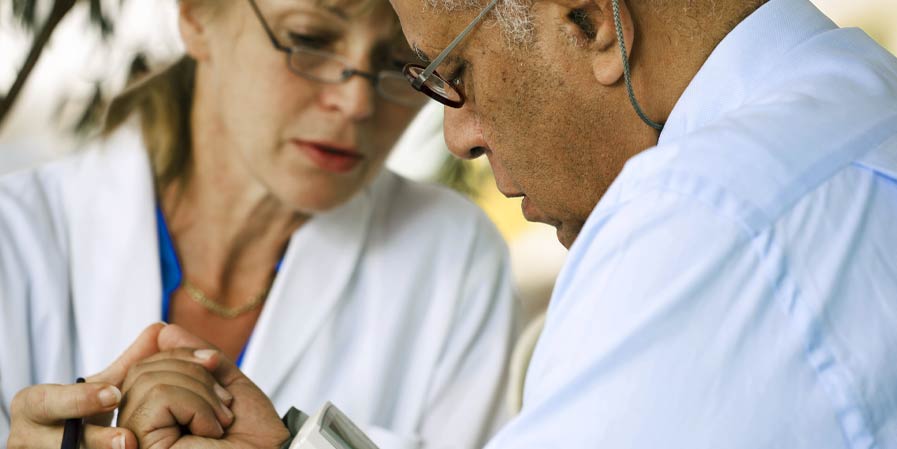
It was a headline that shocked; a small town in the Wheatbelt of Western Australia offering a GP up to $1 million to move there.
In their search for a GP, Quairading, 164 kilometres east of Perth, became a national talking point in early 2023. The story travelled fast – and with it, a sense that rural health had reached a breaking point. But for people on the ground, the reality was less dramatic and far more familiar.
Behind the headlines, many small, inland communities across rural and remote Western Australia are stepping in to fund what Medicare cannot sustain in thin markets. Not as a policy ambition, but because the alternative was unthinkable.
Lose the GP and the impacts ripple quickly – through the hospital, the pharmacy, the school and the local economy. Families think twice about staying. Older residents worry about ageing in place. Businesses lose confidence.
As one local government CEO put it bluntly: “We’ll always sacrifice a kilometre of road to keep the doctor. If we lose the doctor, we lose the town.”
To better understand the scale of this trade-off, Rural Health West and Western Australian Local Government Association (WALGA) jointly commissioned the Local Government Primary Health Services Survey in 2023, alongside in-depth interviews with local government CEOs and staff responsible for managing supported medical services.
Nearly half of responding local governments reported providing financial or in-kind support to GP services. Collectively, they contributed more than $9.5 million in 2024-25 to GP services (up from $7.8 million in 2021-22) – much of it in communities with fewer than 5,000 people.
These incentives vary from community to community, and can include income guarantees for doctors, free or subsidised housing, practice fit-outs, vehicles, administrative support and, in some cases, direct operation of medical clinics. All funded by ratepayers who are already contributing to the national health system through their taxes and the Medicare Levy.
The economic equation is skewed. In some WA local governments, the cost of securing a GP can exceed $900 per resident each year. Meanwhile, larger regional centres with more robust primary care markets often contribute nothing directly at all.
Yet without that local investment, many communities would have no GP.
This is why local governments across WA are experimenting with cooperative approaches. Instead of each town carrying the risk alone, neighbouring shires are sharing financial, administrative and operational responsibility for medical services. It’s a model borrowed from how rural communities have long managed essential infrastructure, such as libraries and recreation centres – pooling scarce resources to keep vital services running.
Other local governments are trialling hybrid models, retaining control of facilities and staff while doctors operate under revenue-sharing arrangements. The aim is stability – creating a service that people can rely on, even if it runs at a loss.
And losses are common. Rising employment costs, workforce shortages, competition for clinicians and the sheer challenge of servicing dispersed populations mean many local government-backed practices struggle to break even. But local leaders persist, because the alternative is worse.
What these stories reveal is not local failure, but systemic market failure. Medicare works well where patient volumes are high and overheads can be spread across multiple GPs. In small, inland communities, those conditions don’t exist. Expecting the same funding model to deliver the same outcomes ignores the economic realities of place.
Seeing this burden grow over the years, Rural Health West and WALGA are working together – alongside other organisations across the WA health system – to raise awareness of the true cost of sustaining primary care in small communities and to identify more sustainable solutions.
Our work aims to build a clearer evidence base, elevate local government voices, and support governments to design funding and service models that are fairer and better aligned with rural realities.
The question now is whether broader policy settings will catch up with what rural communities already know. Because while local governments have shown extraordinary commitment, the current model relies on goodwill, not sustainability.
And goodwill, like a country road budget, only stretches so far.
The Local Government Primary Health Services Survey report is available at:
walga.asn.au/policy-and-advocacy/our-policy-areas/community/regional-health
As a fourth-year medical student, Xanthie Harvey recently had the opportunity to complete a rural general practice (GP) rotation with Read more
Growing up in rural Queensland instilled in Dr Prue Wallin resilience, compassion, and a deep respect for community—values that shaped Read more
Across Australia’s vast landscapes, from outback towns to coastal farming communities, people living with eating disorders face many barriers in Read more

Rural GPs are the backbone of their communities, providing cradle-to-grave primary care, supporting hospitals, responding to emergencies, and often doing Read more