
When we think of the Oklahoma* in the American Midwest and the Australian Top End, the immediate similarities might not seem obvious beyond the red dust that coats the boots of those who work the land. However, as Oklahoma State University (OSU) and Charles Darwin University (CDU) have discovered, these two red dirt regions share a profound economic challenge: the “tyranny of distance”. This geographical reality dictates that the delivery of emergency services is not just a logistical nightmare, but a significant financial burden for remote populations.
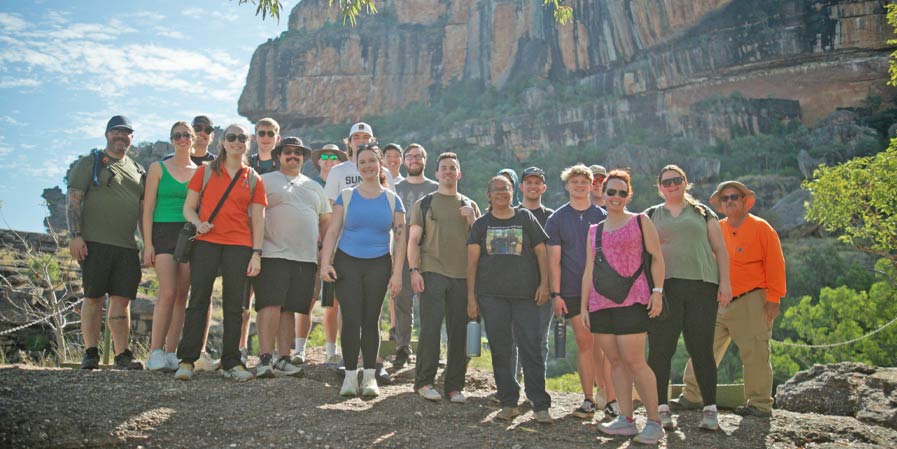
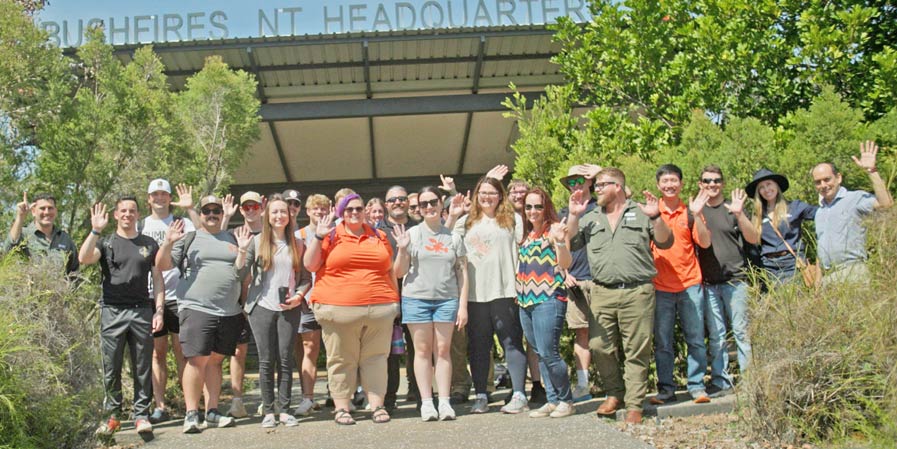
In May 2025, students and faculty from the OSU Fire and Emergency Management Program joined CDU’s Humanitarian, Emergency, and Disaster Management (HEDM) Program for an immersive study tour of the Northern Territory. The goal was to examine how resilience, the capacity to prepare for, absorb, and recover from disruptions, can be built more cost-effectively in low-resourced environments.
The innovation of service efficiency
A primary focus for rural health and safety is the development of service efficiencies that do not require the massive infrastructure budgets of urban centres. This was vividly illustrated by the work of Dr Rohan Fisher at CDU. His use of Projection Augmented Landscape Models (PALM) provides a high-impact, low-cost solution for disaster preparedness.
By overlaying fire simulations onto 3D-printed physical maps of local terrain, the technology creates a holographic effect that is tactile and accessible. Economically, this is a gamechanger for remote communities. Because these models are literacy-independent and do not require expensive technical training, they allow local Elders, rangers, and planners to visualize hazards and coordinate responses without the need for constant, costly external consultancy. It is a model for how high-tech data can be bridged into human understanding at a fraction of the cost of traditional simulation systems.
Cultural capital as preventative mitigation
The tour moved beyond the classroom to witness Caring for Country in practice across Kakadu and the West Arnhem region. For the visiting students, seeing Aboriginal ranger groups utilise traditional “cool burning” techniques was a paradigm shift. From an economic perspective, this represents the ultimate mitigation strategy.
Reactive disaster response, such as firefighting during a catastrophic bushfire, is exponentially more expensive than proactive land management. By treating fire as a tool for regeneration rather than merely a threat to be extinguished, these Indigenous practices reduce fuel loads and prevent the financial devastation associated with large-scale mega-fire disasters. The integration of this ancient knowledge into modern disaster frameworks offers a blueprint for long-term viability and significant cost-avoidance.
A global workforce for local resilience
The partnership between OSU and CDU, officially cemented during this tour, represents a strategic investment in the future workforce of emergency management. “I have seen how these international exchanges challenge students to look past centralised, resource-heavy models” observes Dr Rodney Eksteen, a Senior Lecturer and program lead at CDU.
In these remote environments, relationships are just as critical as resources. By training future leaders to value local stewardship and innovative, accessible technology, we are ensuring that rural disaster management becomes more scalable and sustainable. As climate change continues to intensify weather events globally, the bond between these “red dirt” regions provides a practical model for building rural resilience that is economically viable and culturally grounded.
More Information: To explore the courses offered in the HEDM program at CDU, visit cdu.edu.au/health/humanitarian-disaster-resilience.
*Oklahoma is called “Red Earth” because its common soil, Port Silt Loam, gets its distinctive reddish-brown colour from iron oxide (rust), resulting from the weathering of reddish Permian-era rocks like sandstones and shales rich in iron minerals, a hue that permeates the state’s landscape and culture. This vibrant soil is a major part of Oklahoma’s identity, inspiring its music (Red Dirt Music).