
Research is often criticised for being extractive, taking knowledge and information away from people and communities without returning any benefit. Aboriginal values have taught researchers like me to question this lack of reciprocity and to find new ways of doing research which return benefits to people. This story shares some of the changes I made to the way I did research and how the community has benefited as a result.
First a little bit about me. I am a non-Aboriginal woman with a colonial-settler history in Australia. I have lived and worked in Dubbo since the early 1990s. Like most Australians, my education about Aboriginal anything was lacking and it is because of the generosity of Aboriginal elders and community members that I have learnt about Aboriginal cultural protocols and history. I work at the University of Sydney at the Rural Clinical School in Dubbo as an academic.
In 2014 I undertook diabetes research with a team of Aboriginal Health Workers which really challenged the way research ‘should’ be done. As a result of me listening to my collaborators, the participatory study design and data collection events were a resounding success. Each data collection session started with morning tea and a social yarn, followed by a focus group and lunch. After lunch one of the researchers who was an Aboriginal Health Worker and Diabetes Educator would run a Feltman session specifically picking up on questions participants had during the data collection session. The participants enjoyed themselves so much they asked whether they could come back again the following month!
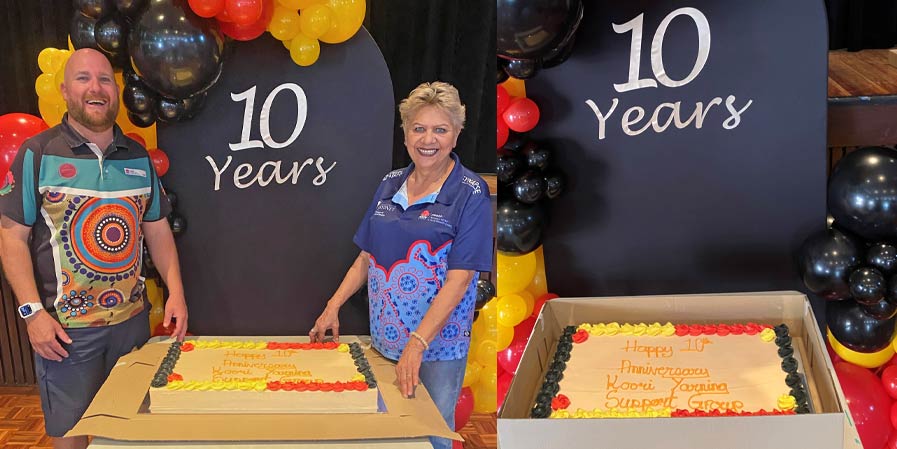
So the Koori Yarning Wellbeing Support Group was born and in October 2025 celebrated its 10-year anniversary.
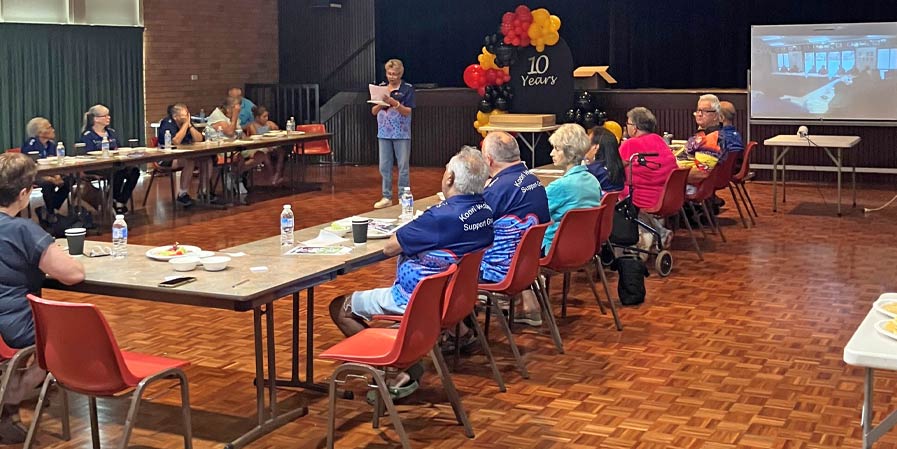
The Koori Yarning Wellbeing Support Group is led by Aboriginal Practitioners from different health agencies in Dubbo. It is open to anyone to attend. The format loosely follows that of our data collection sessions… they kick off with morning tea and a social yarn. Two third-year medical students undertake health assessments, the results of which are monitored by the team at the Dubbo Diabetes unit. The Group hear from two guest speakers on topics requested by members. The topics are usually health related… for example September 2025 was a talk from the dietitian about hidden sugar in drinks and a talk from the cancer unit about how to access lung cancer screening. Lunch and lucky door prizes (usually vegie packs) wrap up the day.
Members love coming along and numbers remain strong with 25-30 each month. Many credit their longevity to the group. An Elder who turned 90 recently shared that she would not have made that milestone without the group. Sessions are held in a community venue as members describe they feel more comfortable than a health setting. One member described to me that it feels that health professionals and researchers are being invited into her lounge room, and this meant she was better able to absorb information in a comfortable setting.
While doing health assessments, medical students learn directly from Aboriginal community members. Students have valued this opportunity to build relationships with community and have raised and donated money to ensure the Group is sustainable. These donations have complemented funding received from Western NSW Local Health District, Western NSW Primary Health Network and the University of Sydney.
I don’t go to every session… probably only a couple across the year. But I love keeping in touch and I’m grateful I have been guided by my community to do research which is still ‘giving back’ to community a decade later.
The Early Intervention Healthy Ageing Program, funded by the Australian Government and delivered through Northern Territory Primary Health Network (NT Read more
During 2025 NAIDOC staff at Northeast Health Wangaratta (NHW) had an opportunity to participate in a group weaving activity. This Read more
Rural mental health professionals face unique challenges – from professional isolation to high caseloads and limited peer support. But innovative Read more
Australian rural healthcare practitioners face well-documented challenges like professional isolation, expanded scopes of practice, staff shortages, and limited learning opportunities. Read more